
Commercial Tile Roofs, Shingle Roofs & Steep-Slope Roofing in Orange County
Commercial Tile Roofs, Shingle Roofs
& Steep-Slope Roofing in Orange County
Tile, Asphalt Shingle, and Steep-slope Roofing Services
Pacific Roofing Systems provides professional tile, asphalt shingle, and steep-slope roofing services for commercial properties throughout Orange County, California. From HOA communities and apartment complexes to office buildings, retail centers, churches, schools, and mixed-use developments, we help property managers protect valuable assets while maintaining curb appeal, tenant satisfaction, and long-term roofing performance.
Steep-slope roofing systems are often among the most visible architectural features of a property. Proper installation, maintenance, repair, and replacement are essential for preserving both the building’s appearance and weather protection. Our experienced team understands the unique requirements of commercial steep-slope roofing and provides solutions designed to maximize service life while minimizing disruptions to tenants and operations.
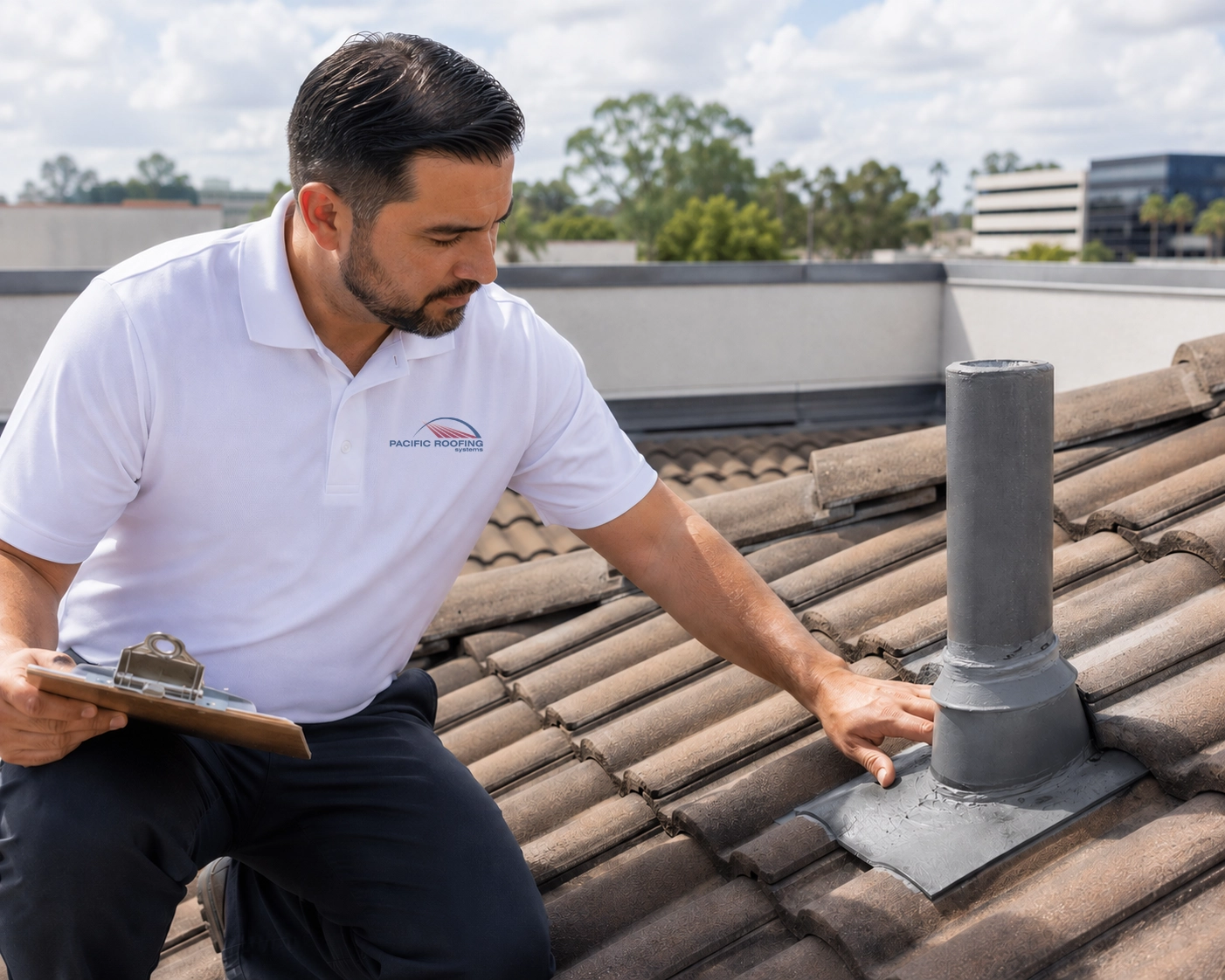
Commercial Tile Roofing Systems
Tile roofing remains one of the most durable and attractive roofing options available for Southern California commercial properties. Clay and concrete tile systems complement a wide range of architectural styles while offering excellent resistance to sun exposure, weathering, and aging.
While the tile itself often lasts for decades, the performance of the roof depends heavily on the underlying waterproofing system. Underlayment deterioration, flashing failures, broken tiles, and poor previous repairs can all contribute to leaks and water intrusion.
Pacific Roofing Systems provides comprehensive tile roofing services including:
- Tile roof inspections
- Leak detection and repair
- Broken tile replacement
- Valley repairs
- Flashing replacement
- Underlayment replacement and re-roofing
- Preventative maintenance programs
- Full tile roof replacement projects
Our team works with both clay and concrete tile roofing systems and understands the specialized installation techniques necessary to maintain the roof’s integrity and appearance.
Commercial Asphalt Shingle Roofing
Architectural asphalt shingles remain a popular roofing solution for many commercial properties, particularly office buildings, apartment communities, HOA facilities, clubhouses, churches, and mixed-use developments.
Modern commercial-grade shingle systems offer significant improvements in durability, wind resistance, energy efficiency, and aesthetic appeal compared to older generations of roofing products.
Our shingle roofing services include:
- Roof inspections and condition assessments
- Leak repairs
- Storm and wind damage repairs
- Flashing repairs and replacement
- Shingle replacement
- Preventative maintenance
- Full roof replacement
- Insurance claim support documentation
Whether your property requires a localized repair or a complete replacement, Pacific Roofing Systems provides roofing solutions designed to maximize value, longevity, and appearance.
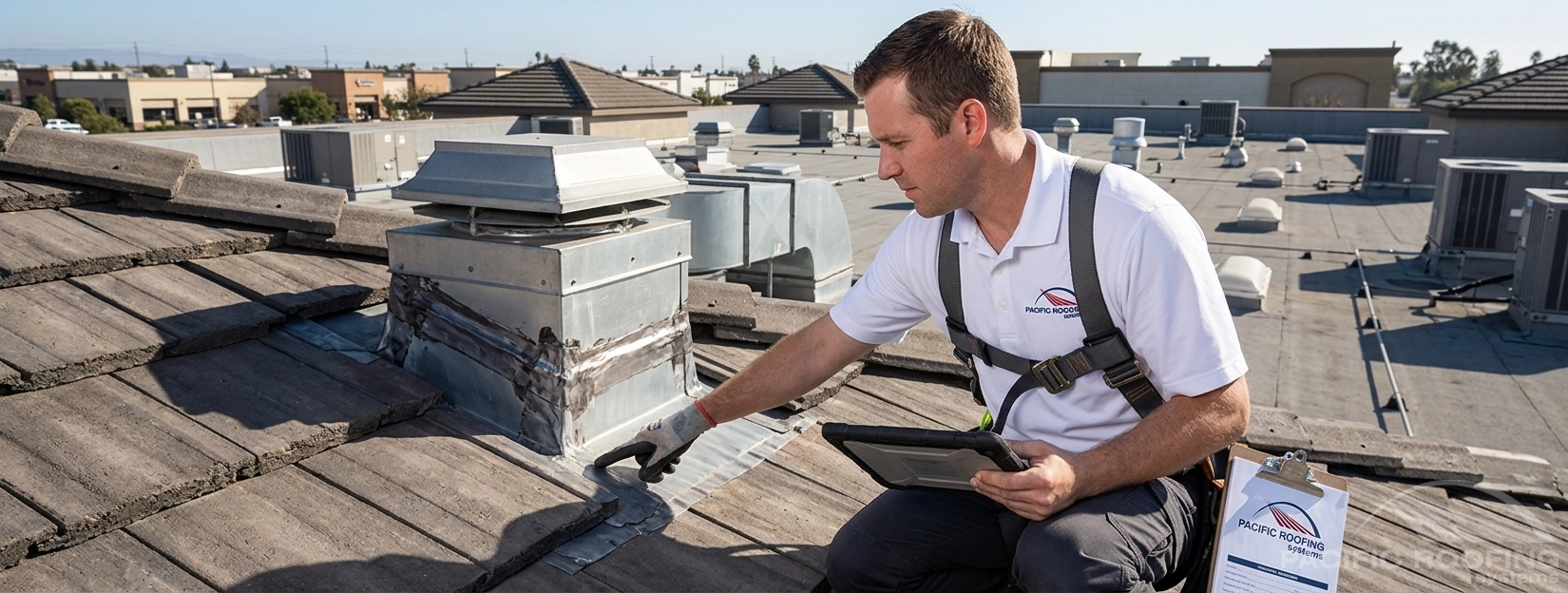
Understanding Commercial Steep-Slope Roofing
Steep-slope roofing generally refers to roofing systems installed on roof surfaces with a slope greater than 3:12. Unlike low-slope roofing systems, steep-slope roofs rely heavily on gravity to quickly shed water, reducing standing water concerns while creating distinct maintenance and repair considerations.
Many commercial properties feature complex roof designs that include:
- Multiple roof elevations
- Dormers and architectural projections
- Decorative roof features
- Skylights
- Mechanical penetrations
- Parapet transitions
- Gutters and drainage systems
These details require experienced craftsmanship and careful waterproofing to ensure long-term performance.
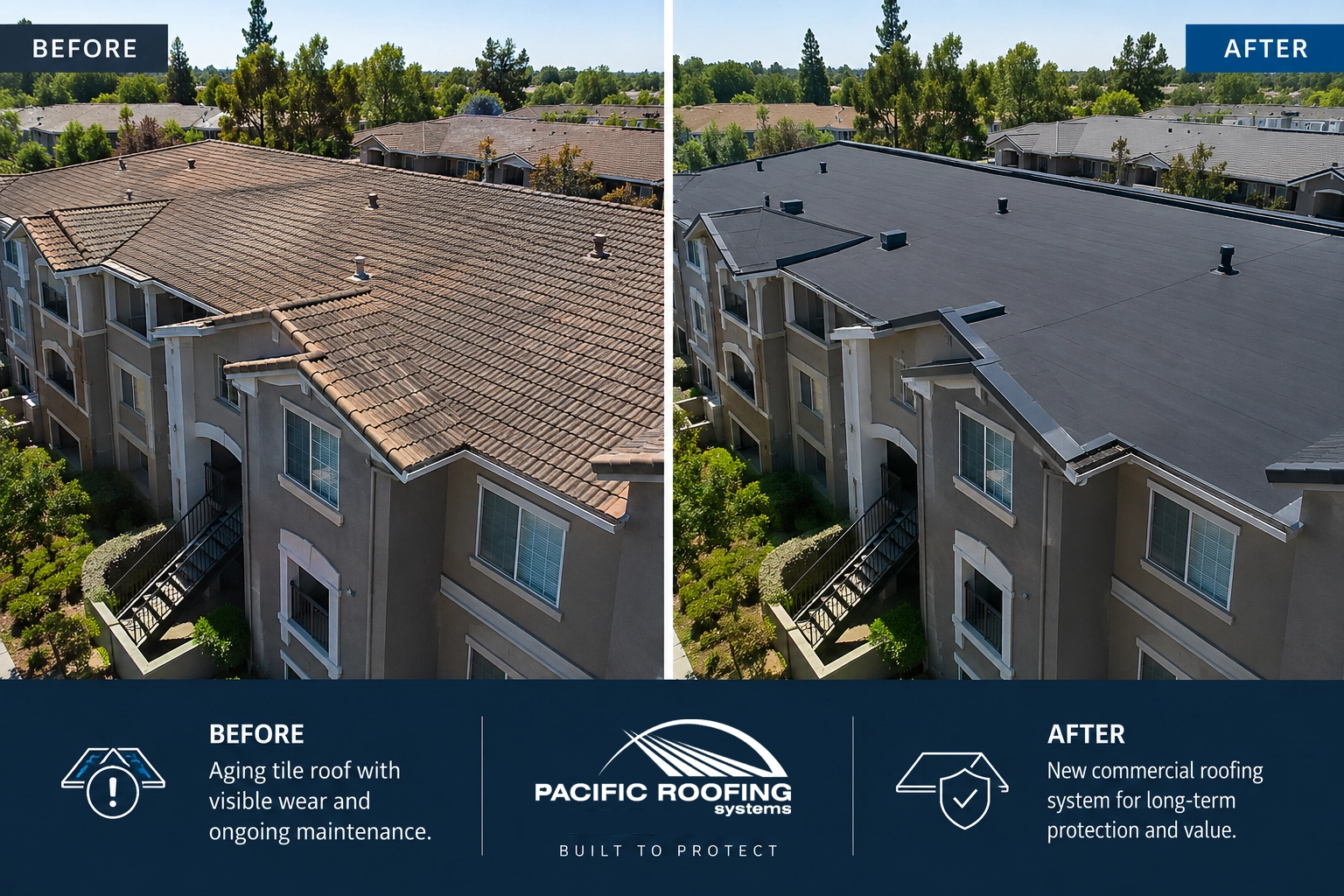
Common Problems Found on Tile, Shingle & Steep-Slope Roofs
Commercial steep-slope roofing systems face constant exposure to Southern California’s climate. While generally durable, they remain vulnerable to a variety of issues that can develop over time.
- Broken or slipped roof tiles
- Missing or damaged shingles
- Aging underlayment systems
- Failed flashing details
- Water intrusion around roof penetrations
- Valley deterioration
- Wind damage from Santa Ana conditions
- UV-related material degradation
- Drainage issues and gutter failures
- Damage caused by HVAC or contractor foot traffic
Our inspection process identifies both active leaks and developing vulnerabilities, helping property managers make informed decisions before minor issues become major expenses.
Commercial Roof Inspections for Property Managers
Property managers need more than a simple roof opinion. They need actionable information that supports budgeting, capital planning, maintenance decisions, tenant communications, and ownership reporting.
Pacific Roofing Systems performs detailed roof inspections that evaluate:
- Overall roof condition
- Remaining service life
- Repair priorities
- Drainage performance
- Flashing and waterproofing details
- Safety concerns
- Potential leak sources
- Future replacement planning
Our goal is to provide practical recommendations that align with the property’s operational and financial objectives.
Repair vs. Replacement: Making the Right Decision
Not every roofing issue requires a complete replacement. In many cases, targeted repairs and proactive maintenance can significantly extend the life of a roof. However, when underlayment systems have reached the end of their service life or repairs become increasingly frequent, replacement often provides the most cost-effective long-term solution.
Pacific Roofing Systems helps property managers evaluate repair-versus-replacement options based on roof age, leak history, maintenance costs, building plans, and ownership goals.
Why Property Managers Choose Pacific Roofing Systems
- Extensive commercial roofing experience
- Expertise in tile, shingle, and steep-slope roofing systems
- Comprehensive inspections and reporting
- Clear communication throughout every project
- Responsive service and emergency support
- Quality workmanship and attention to detail
- Long-term maintenance planning assistance
- Service throughout Orange County and surrounding areas
We understand that commercial roofing projects affect tenants, customers, employees, and property operations. Our team works closely with property managers to minimize disruptions while delivering dependable roofing solutions.
Schedule a Commercial Roof Inspection
If your property includes tile roofing, asphalt shingles, or other steep-slope roofing systems, Pacific Roofing Systems can help you protect your investment through professional inspections, maintenance, repairs, and replacements.
Contact Pacific Roofing Systems today to schedule a commercial roofing consultation and learn how our team can help extend your roof’s lifespan and performance.
Call Now: 949-495-4200 ·
The Only Estimate You Need
Accurate. Competitive. Transparent.

