
Commercial Spray-On Roof Coatings: Install, Repair, Restore

Spray-On Roof Coatings · Application & Repair
For over 25 years, Pacific Roofing Systems has proven to be Orange County’s premier commercial roofing company and is often considered the best roofer for roof coatings applications throughout Southern California. Contact us for the highest quality roofing contractor you can trust to complete your project with great care and expertise.
Roof coatings are the finishing touches for a commercial roof. An appropriate coating can increase your roof’s longevity and durability and reduce the need for early replacement. Pacific Roofing Systems offers commercial roof coatings throughout Orange County, CA.
What are Roof Coatings?
Roof coatings are liquefied polymers applied to protect and extend the life of a roof system. There are many variables to consider regarding roof coatings’ performance, longevity, and suitability. Below, we provide an overview of the benefits, chemistry types, and physical properties to look for in an effective coating solution.
Benefits of Roof Coatings
Elastomeric roof coatings have been around for a long time, yet many facility owners and managers still need to be made aware of the numerous advantages they provide. When choosing a coating, it is essential to consider the location and current condition of the roof, as well as any ponding water, chemical exposure, high heat, and UV radiation. Roof coatings provide a seamless application that conforms to irregular roof surfaces and seals cracks and splits in the roof surface, which helps to prevent water from leaking into the building structure and the sun from drying it out. Coatings can be applied to address a variety of roofing concerns:
- Reduces costs
- Extends the life of the roof
- Waterproofs
- Provides UV Protection
- Improves energy efficiency by lowering surface temperature
- Environmentally sustainable and friendly
Reduces Costs
A total roof replacement can be expensive. On the other hand, a roof coating system (or restoration system) provides all the benefits of a new roof but for a fraction of the cost.
Roof coatings are applied directly to existing roof surfaces. As such, they carry a fraction of the labor and material costs associated with a traditional roof tear-off and replacement. You can expect to pay 50-70% less for installing a roof coating system.
Extends the Life of the Roof
An elastomeric coating system’s best-known quality is its ability to extend roof life. The average commercial roof only lasts about 20 years. Adding a coating system can prolong a roof’s serviceable life by up to 10, 15, or even double its life. When properly installed and maintained, a coating system can be recoated numerous times. It can also significantly reduce the need for constant maintenance and repair.
Waterproofs
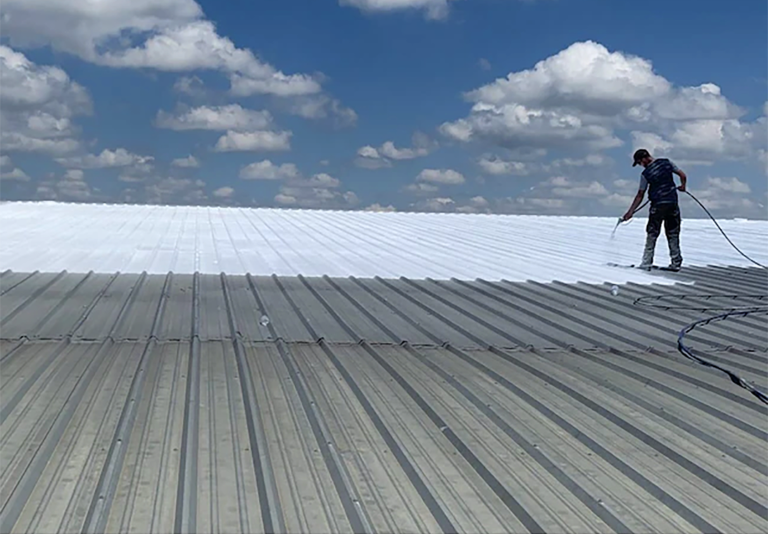
Waterproof roof coating is available in similar forms for UV protection. However, under the Southern California heat, many people focus more on UV protection and need more preparation when it rains. A waterproof coating is often applied in conjunction with a UV protection roof coating.
Provides UV Protection
UV protection roof coatings are specifically engineered to deflect the sun’s rays. UV protection roof coatings can be applied as liquid or thin sheets of a material that deflects the sun’s rays. Applying ordinary white paint to a roof does not impart UV protection. Overexposure to severe sunshine can cause the roof to have a shorter life than usual. Investing in a UV protection roof coating can lengthen the roof’s life.
Improves Energy Efficiency
Coating your roof is a great way to improve the energy efficiency of your building. Unlike conventional dark-colored roofing materials, white roof coatings reflect 80-90% of the sun’s harsh UV rays and diminish heat flow to your building. This reduces the workloads of HVAC systems during warm summer months and cuts interior cooling costs by up to 20% on average. Additionally, a coating system’s superior reflective and emissive qualities can significantly cool roof surface temperatures and provide a more comfortable work environment for building occupants. Unconditioned spaces can experience a reduction in ambient temperatures, as well.
Environmentally Friendly
The demand for more sustainable roofing solutions has grown considerably due to more stringent environmental regulations and building codes, as well as increasing environmental concerns. Commercial roof tear-offs contribute millions of tons of waste to landfills each year. In contrast, no tear-off is required before applying a commercial roof coating system, allowing you to reuse existing roofing materials with minimal environmental impact. The prospect of recoating also contributes to increased sustainability. In addition to improved sustainability efforts, many of today’s elastomeric coatings are developed with little to no volatile organic compounds (VOCs), making them much safer for the environment.
Types of Roof Coatings:
Acrylic Roof Coatings.
Acrylic roof coatings are the industry’s most durable and inexpensive elastomeric coatings. Comprised of high solids emulsion polymers and potent biocides, these highly reflective coatings are ideally suited for extreme UV climates and provide superior resistance to mildew and dirt accumulation.
Acrylic roof coatings cure to form a durable, continuous elastomeric membrane over the surface of your metal roof. Once applied, they create a seamless, watertight seal over the entire roof, including around vents, flashings, and protrusions. These products are a self-flashing, lightweight acrylic roof coating that provides a continuous membrane while sealing seams and eliminating leaks. This coating is energy efficient and environmentally friendly, and is highly reflective with no VOCs. Durable with excellent weathering capabilities, this advanced liquid-applied system restores metal roofs and can eliminate minor metal roof problems.
Acrylic roof coatings were initially developed to provide ultraviolet protection for sprayed urethane foam applications. These coatings are used on various roof membrane surfaces, including single-ply membranes and metal systems. Acrylic-based materials offer excellent resistance to radiation and weather damage and have the inherent flexibility required to withstand the dimensional instability of most roof membrane surfaces. Some studies have indicated that properly formulated acrylic coatings can reduce the surface temperature by as much as 20 degrees F when exposed to direct sunlight at 85 degrees F.
Acrylic coatings are 100 percent acrylic and can be applied in one or more coats. Most manufacturers provide warranties based on the coverage rates; extended warranties require additional coverage. The cure time of these products is highly weather-dependent, and cold weather or high humidity will impede curing. Ideal curing takes place in warm weather and low humidity. Acrylic coatings should not be applied in freezing temperatures or when precipitation may occur within a specified period from the application. Several acrylic coating manufacturers now offer instant-set materials. This reduces the cure time of the acrylic coating to a few minutes, thereby eliminating the possibility of coating run-off if there is precipitation directly after application.
Acrylic coatings are often used to restore aged metal roofs. Still, they work on several different roofing substrates, such as modified bitumen, single-ply, built-up roofs, and spray polyurethane foam. Acrylics are easy to work with and come in standard, premium, and custom colors. Depending on the substrate, these materials can be sprayed or roll-applied at a rate of .75 to 1.5 gallons per 100 square feet. Acrylics are not suitable for ponding water and are only recommended for roofs with positive drainage. Cold temperature applications can also be a problem. Because acrylic is a water-based substance, temperatures at or below 50°F can negatively affect adhesion to the roof substrate and impede cure time.
Asphalt Emulsion
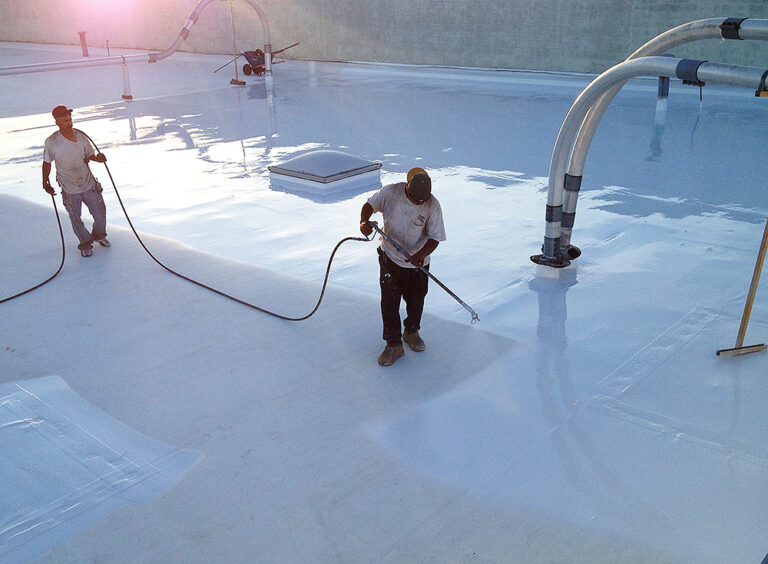
Asphalt emulsion (fluid-applied asphaltic rubber membrane system) is inexpensive and is typically used to level alligatoring and other irregularities that commonly occur on modified bitumen and built-up roof surfaces. An asphaltic rubber membrane system can be applied in cold-process fluid-applied applications for life extension repairs. Unlike coatings that only provide a film surface or adhesives that require reinforcements for waterproofing capacity, asphaltic rubber forms a monolithic, seamless membrane that provides instant waterproofing/weatherproofing capabilities, providing a long-term, economical repair system.
Asphalt emulsion consists of asphalt particles dispersed in water, with clay used as a bonding element. The asphaltic rubber material combines the elastic properties of rubber with the waterproof/weatherproof characteristics of highly refined emulsified asphalt. The resulting formulations are proprietary materials that form a fully adhered monolithic, seamless rubber membrane. The resulting membrane can range from 20 mils to 200 mils dry. Generally black or brown in color, asphalt emulsion contains organic and inorganic compounds and other fillers to add strength and durability.
Although it can be installed as a standalone roofing material, an asphalt emulsion is commonly used to provide a monolithic foundation membrane for other elastomeric roof coating systems that offer better reflectivity and UV stability. Asphalt emulsion usually requires 3 to 4 gallons per 100 square feet, depending on the substrate. Multiple passes may be necessary to achieve good results.
Butyl Rubber
Butyl coatings are a solvent-based polymer best known for their exceptional elongation and tensile strength. They are highly reflective, fast-drying, and great for roof maintenance and repair. A butyl coating system is suitable for various commercial roof surfaces, including metal, modified bitumen, single-ply, built-up roofs, and spray polyurethane foam. They are typically white, gray, or tan in color and can be sprayed or roll-applied at a rate of about 2 gallons per 100 square feet.
The primary disadvantage of butyl coating is its low solids content. This means it takes more liquid material to achieve a specific dry mil thickness, which makes it less cost-effective than alternative coating types. They can also be challenging to work with and need more color stability. Due to their low permeability, butyl rubber coatings are mainly used as a vapor-retardant barrier over spray polyurethane foam systems in cold storage/freezer applications.
Silicone Roof Coatings
Silicone roof coatings have been designed to be durable, reliable, and easy to apply. These coatings allow you to restore your roof to a watertight state while extending the service life of your roof. This means you can maximize your investment, increase energy efficiency, and improve the safety of your roof without having to do a complete roof replacement.
Silicone coatings have gained market share in the commercial roof market in the last decade. The rise in applications is primarily due to the material’s ability to withstand long-term exposure to ponding water, unlike most other coatings. Silicone coatings also provide excellent ultraviolet protection in extreme temperatures and harsh environments, and can resist oxidation.
Silicone coatings are manufactured with a high-solids dispersion of 100 percent silicone. It is a highly elastic material that provides excellent adhesion to the existing surface. Silicones offer good weather resistance and rarely become hard or brittle. In white, gray, or tan, silicone can be installed on various roof types, including metal, modified bitumen, single-ply, EPDM, built-up roofs, and spray polyurethane foam. Depending on the substrate, most silicone roofing systems require multiple coats at 1.5 gallons per 100 square feet.
Some drawbacks are cost, application requirements, and that only a few materials – other than silicone – can be applied directly to the silicone surface. Silicones attract dirt relatively easily. This means the system will gradually lose reflectivity over time if not cleaned periodically. They are also highly slippery when moisture is present. Resistance to tearing is another inherent weakness. If pedestrian traffic is expected on the roof, we recommend incorporating roofing granules into the system.
At Pacific Roofing Systems, our roof coating division works with commercial and HOA clients, such as industrial buildings, condo communities, townhome communities, apartment complexes, retail centers, and other commercial buildings. We focus on offering you the services you need, and few other companies are truly trained, certified, and qualified to take care of you.
We recommend that when a new roof is installed, the roof coating should be applied soon thereafter to ensure that the roof is well protected. Depending on their conditions, old roofs can also be improved with the help of a roof coating. Whether you’re trying to find the right commercial roofing solution for a new building or replacing an old commercial roofing system in Orange County, California, contact Pacific Roofing Systems and talk to one of our specialists about roof coatings.
Ready for a free estimate?
Call 949-495-4200 or fill out the form below:

